How Much Does It Cost to Build a Mobile App in 2026?
Most custom mobile apps cost $35,000 to $150,000 in 2026, and a focused first version (an MVP) usually lands between $35,000 and $90,000. Here are typical prices by app type, what pushes the cost up or down, the running costs most quotes leave out, and how to get a fixed price before any code is written.
By Elizabeth Mathers, Content Writer at BuildHive, a custom software studio in Novi, Michigan, founded in 2012.
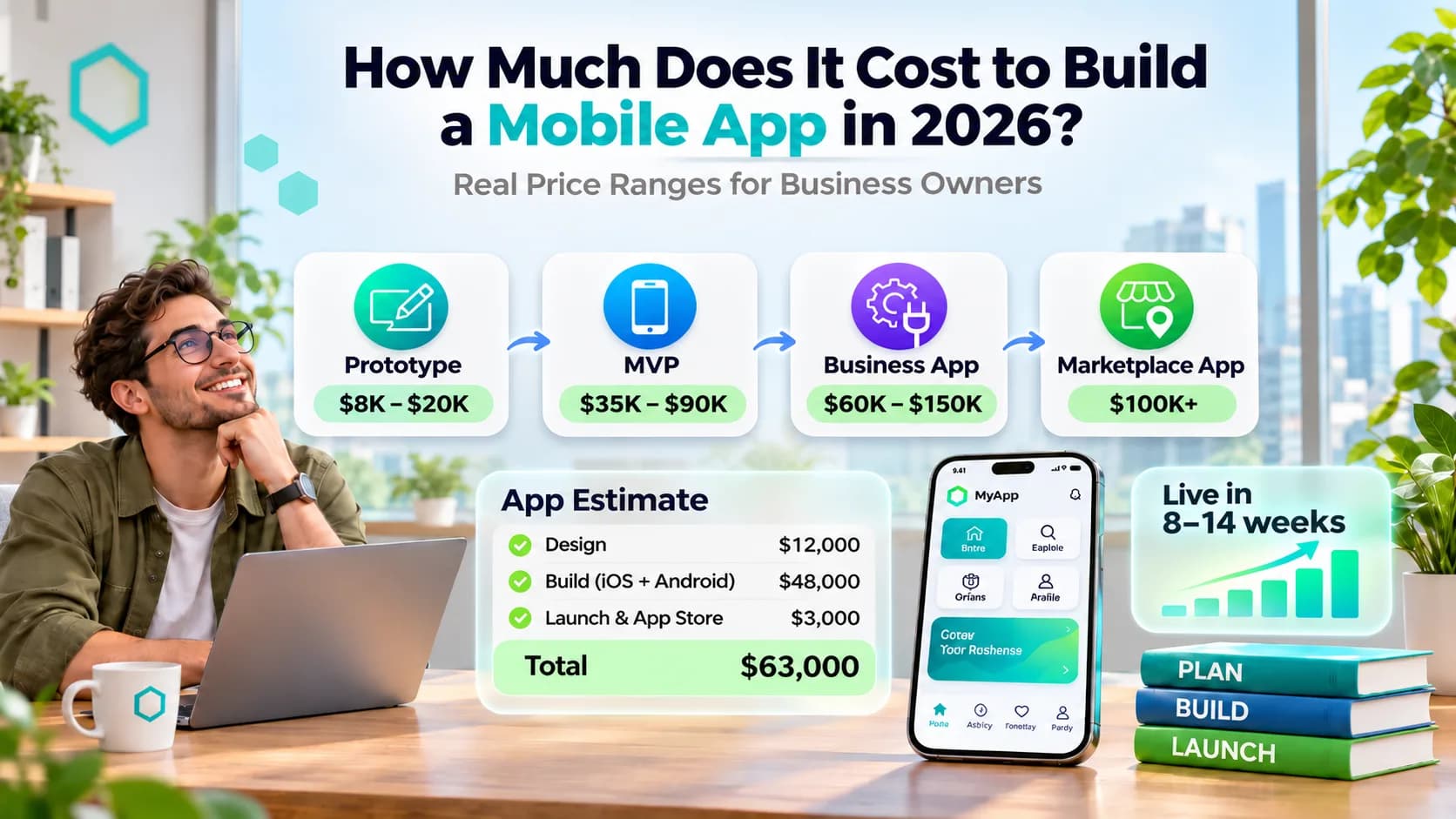
Most custom mobile apps cost between $35,000 and $150,000 to build in 2026. A focused first version, usually called an MVP (minimum viable product), typically lands between $35,000 and $90,000 and takes 8 to 14 weeks. Bigger apps with marketplaces, real-time features or strict compliance rules can pass $250,000.
That's a wide range, because "an app" can mean anything from a simple booking tool to the next Uber. This guide breaks down typical prices by app type, what moves the number, the yearly costs people forget, and how to keep your budget under control.
Want a number for your own app? Try our free app cost calculator for an instant range, or get a free app estimate: a senior engineer will scope your app and give you a fixed price and timeline, yours to keep.
Key takeaways
- Most custom mobile apps cost $35,000 to $150,000 to build in 2026; an MVP usually costs $35,000 to $90,000 and takes 8 to 14 weeks.
- Marketplaces, real-time features and strict compliance rules can push an app past $250,000.
- One cross-platform codebase for iOS and Android usually costs 30–40% less than two native apps.
- Budget 15–20% of the build cost every year for maintenance, plus hosting and app store fees.
- Start with an MVP and get a fixed price before any code is written.
Mobile app cost by type (2026)
These are typical US studio ranges for a production-ready app on both iOS and Android, based on the projects we scope. Treat them as planning numbers, not quotes.
| App type | Typical cost (USD) | Timeline | Example |
|---|---|---|---|
| Clickable prototype | $8,000 – $20,000 | 2–4 weeks | Designed screens you can tap through, to test the idea with users or pitch investors |
| MVP | $35,000 – $90,000 | 8–14 weeks | Core features only, live in the App Store and Google Play, with sign-in and a simple admin panel |
| Business app with integrations | $60,000 – $150,000 | 3–6 months | Booking, payments and CRM sync for a service business, or a job app for field crews |
| Marketplace or on-demand app | $100,000 – $250,000 | 4–8 months | Two-sided app with buyers and sellers, maps, live tracking, payouts and reviews |
| Complex or regulated platform | $150,000 – $400,000+ | 6–12 months | Fintech, healthcare or crypto app with security reviews, compliance and heavy integrations |
For comparison, hiring a small in-house team of two US mobile developers and a designer costs $350,000 to $500,000 a year in salaries alone, before you've shipped anything. That's why most companies build the first version with a studio and hire later, once the app has proven itself.
What moves the price of an app up or down?
Two apps that sound alike can differ in cost by 3× or more. These six factors make the biggest difference:
- Features and screens. Every screen needs design, building and testing. A 12-screen app and a 40-screen app are different projects. Features like chat, video, maps, offline mode and payments each add weeks.
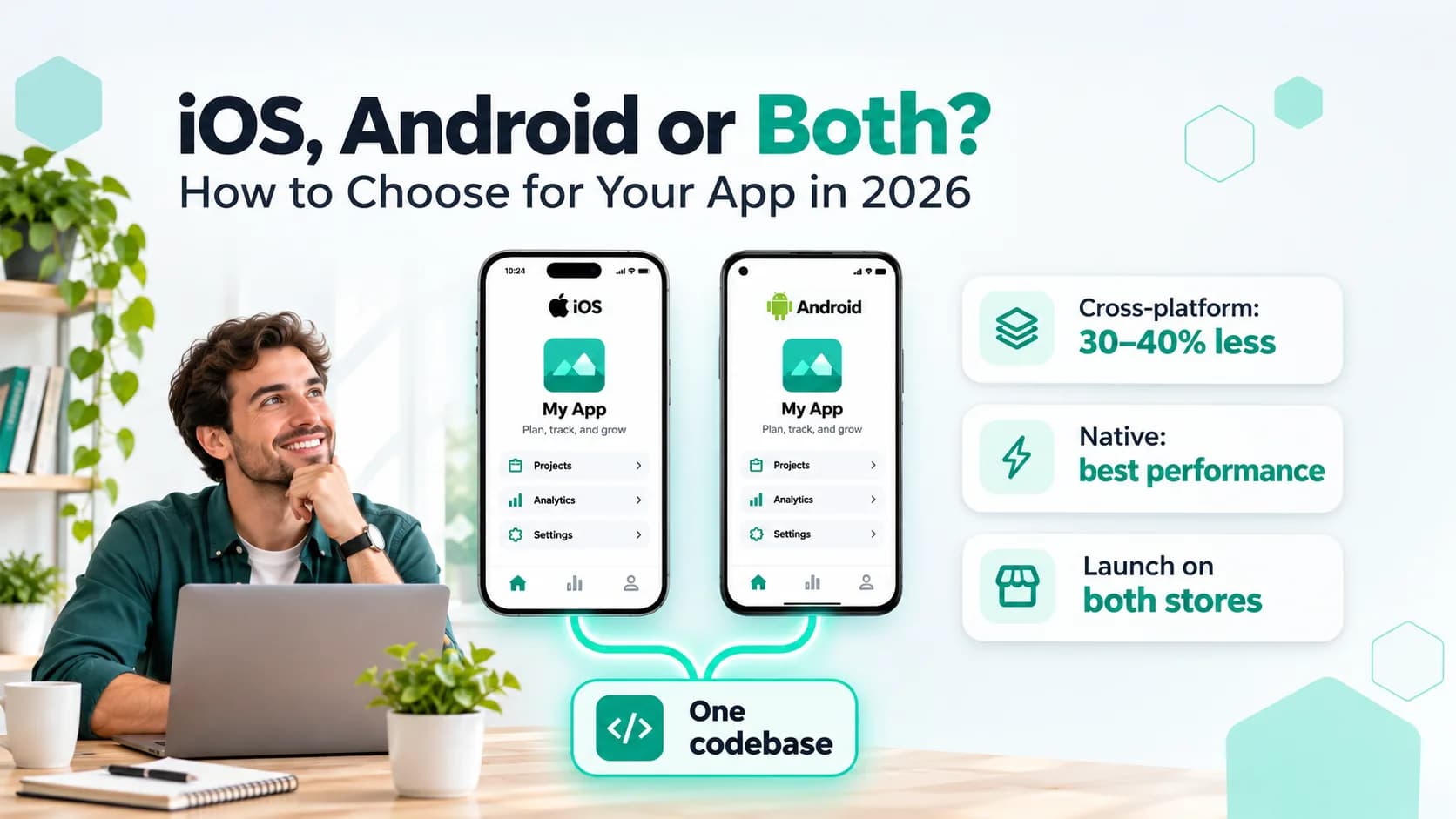
- iOS, Android or both. Building one app that runs on both platforms from a single codebase (with tools like React Native or Flutter) usually costs 30–40% less than building two separate native apps. Fully native apps are worth it when you need top performance or deep phone features. Our guide to choosing iOS, Android or both explains how to decide.
- The backend. The app you see is only half the work. Most apps also need servers, a database, user accounts, an admin panel and notifications. Simple apps can use ready-made services like Firebase; complex ones need a custom backend.
- Integrations. Each outside system the app talks to (payments, your CRM, booking software, accounting, maps) adds setup and testing. One integration is cheap; six is a project.
- Design. A clean design using standard components costs far less than a custom, animated, brand-heavy one. Both can look great.
- Who builds it. Approximate 2026 hourly rates:
| Team | Typical hourly rate |
|---|---|
| Senior US studio | $125 – $200 |
| Eastern Europe or Latin America agency | $50 – $100 |
| South or Southeast Asia agency | $25 – $50 |
| Freelancer | $30 – $150, depending on experience |
A lower hourly rate doesn't always mean a lower total. Time zone gaps, unclear specs and rework add hours, and a stalled project often costs more to rescue than it did to start. A senior team bills more per hour and usually needs fewer of them.
The ongoing costs nobody quotes
Launch day isn't the finish line. Plan for these yearly costs on top of the build:
- App store fees: Apple charges $99 a year for a developer account; Google charges a one-time $25. Both take 15–30% of digital sales made inside the app, such as subscriptions.
- Hosting and backend services: $50–$1,000+ a month depending on your users. Small apps sit at the low end.
- Third-party services: maps, SMS, email, push notifications, analytics and crash reporting. Often $0–$500 a month to start, growing with usage.
- Maintenance: budget 15–20% of the build cost per year. Apple and Google release new phone software every year, and apps that aren't updated start to break or get pulled from the stores.
- New features: your first users will tell you what to build next. Keep a budget for version two.
So a $60,000 app tends to cost $70,000 to $75,000 in its first year all-in. If a quote doesn't mention these, you'll find out about them later.
How long does it take to build an app?
A rough guide for 2026:
- Prototype: 2–4 weeks
- MVP: 8–14 weeks
- Full business app: 3–6 months
- Large platform: 6–12 months
Add 1–2 weeks for App Store and Google Play review and launch prep. Teams that work in two-week sprints can put a working build on your phone within the first month, so you see progress long before launch.
5 ways to lower the cost without cutting corners
- Start with an MVP. Build the one or two features that prove people want the app. Everything else can wait for version two, when you'll have real feedback.
- Build once for both platforms. A single cross-platform codebase covers iOS and Android for most apps. One of our clients, DropFi, runs its wallet on iOS, Android and Chrome from one codebase.
- Use proven building blocks. Ready-made services for sign-in, payments (like Stripe), maps and notifications are cheaper and safer than building your own.
- Get a fixed price, not an open hourly bill. A fixed scope and price stops the budget from creeping and makes the studio responsible for its estimate.
- Make sure you own the code. You should own the code, the designs and the accounts. If you ever change teams, you won't have to start over.
Adding AI to your app
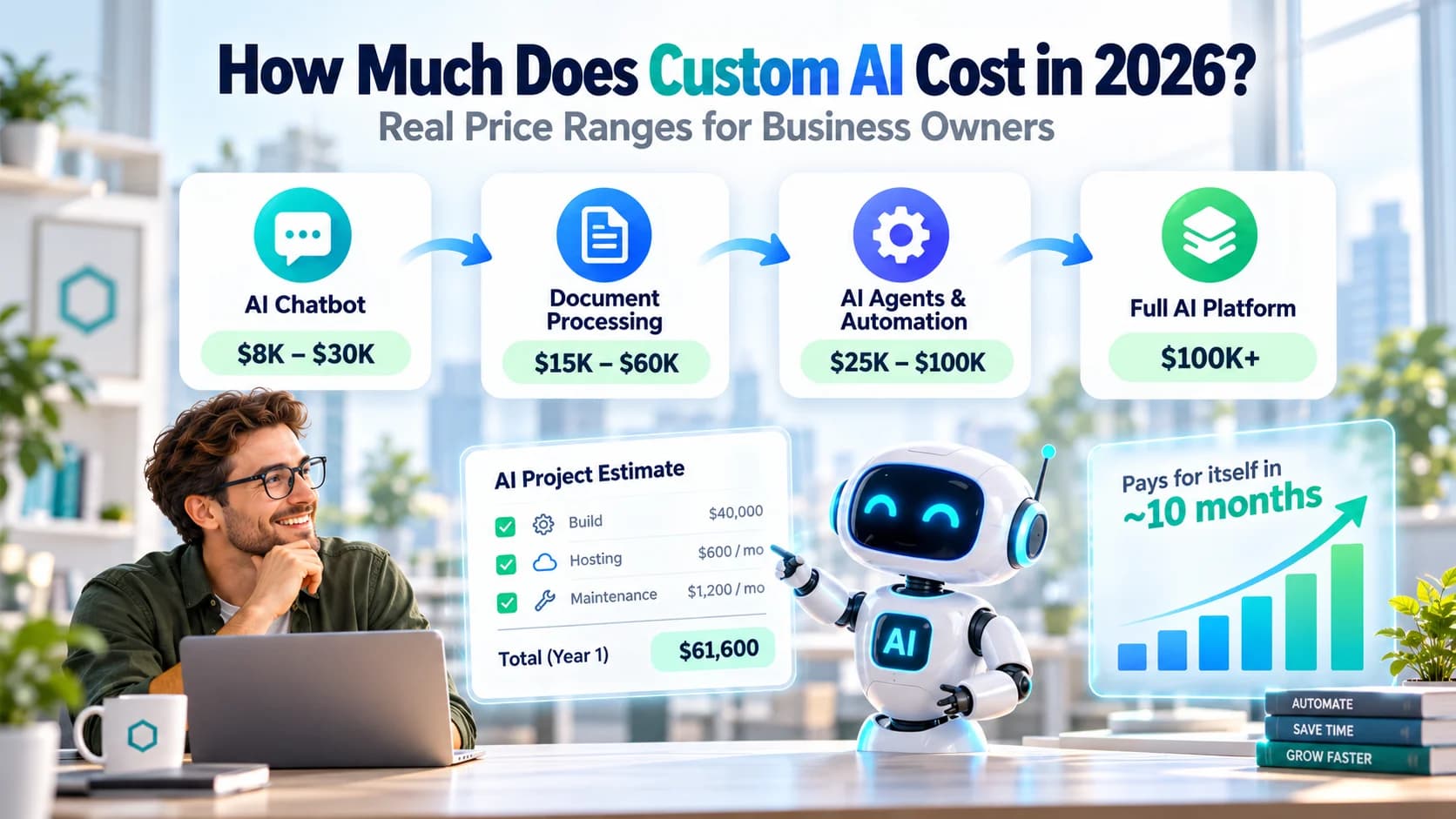
More apps in 2026 come with AI built in: voice notes that turn into job reports, smart search, chat assistants that answer from your own information, or photo analysis. Adding a focused AI feature to an app usually costs $20,000 to $80,000, depending on what it does and how accurate it needs to be. Our guide to how much custom AI costs in 2026 breaks those prices down, and what AI automation is shows real examples of AI in mobile apps.
Frequently asked questions
How much does an MVP app cost?
An MVP typically costs $35,000 to $90,000 and takes 8 to 14 weeks. That covers core features only, live in the App Store and Google Play, with sign-in and a simple admin panel.
How much does it cost to maintain an app each year?
Budget 15 to 20% of the build cost per year for maintenance. On top of that come hosting and backend services ($50 to $1,000+ a month) and store fees: $99 a year for Apple and a one-time $25 for Google.
Is it cheaper to build an app with an in-house team?
Not for a first version. Two US mobile developers and a designer cost $350,000 to $500,000 a year in salaries alone, which is why most companies build the first version with a studio and hire once the app has proven itself.
How much does it cost to add AI to an app?
A focused AI feature usually adds $20,000 to $80,000, depending on what it does and how accurate it needs to be.
The short version
Expect $8,000–$20,000 for a prototype, $35,000–$90,000 for an MVP, $60,000–$150,000 for a business app with integrations, and $100,000+ for marketplaces and complex platforms. Add 15–20% a year for maintenance, plus hosting and store fees. Start with an MVP, build once for both platforms, and get a fixed price before any code is written.
Ready to put a real number on your app? Get your free app estimate. A senior BuildHive engineer will get back to you within one business day, then scope your app and give you a fixed price and timeline, yours to keep whether or not you build with us. Or browse our mobile app work to see what similar apps look like, and read how our mobile app development service works.
For weekly, plain-English takes on apps and AI for business, follow BuildHive on LinkedIn and Instagram.
Figures are typical 2026 US market ranges from projects BuildHive has scoped and are approximate. Your quote will depend on features, platforms, integrations and design.